



Who Invented the Piano? A Short History of the Piano

The piano was invented around 1709 by Bartolomeo Cristofori in Italy. He called it the pianoforte because, unlike the harpsichord, it could play both quiet (piano) and loud (forte). Over the next 150 years, builders in Germany, England, France, Austria and America turned it into the instrument we know today.
At the beginning of the 20th century, Jerry Cree Fischer called the piano "unquestionably, the most perfect, and consequently the most beloved of all musical instruments." More than a hundred years later, this is still the case today.
Piano History Timeline
1709: Bartolomeo Cristofori invents the pianoforte in Italy
1760s: Johann Zumpe's square piano becomes popular in London
1777: Robert Stodart names the "Grand Piano"
1783: John Broadwood patents piano pedals
1821: Sébastien Érard patents the double escapement
1840: Jonas Chickering patents the cast iron frame
1853: Steinway & Sons is founded in New York
1889: First Bösendorfer Piano Competition
What came before the piano?
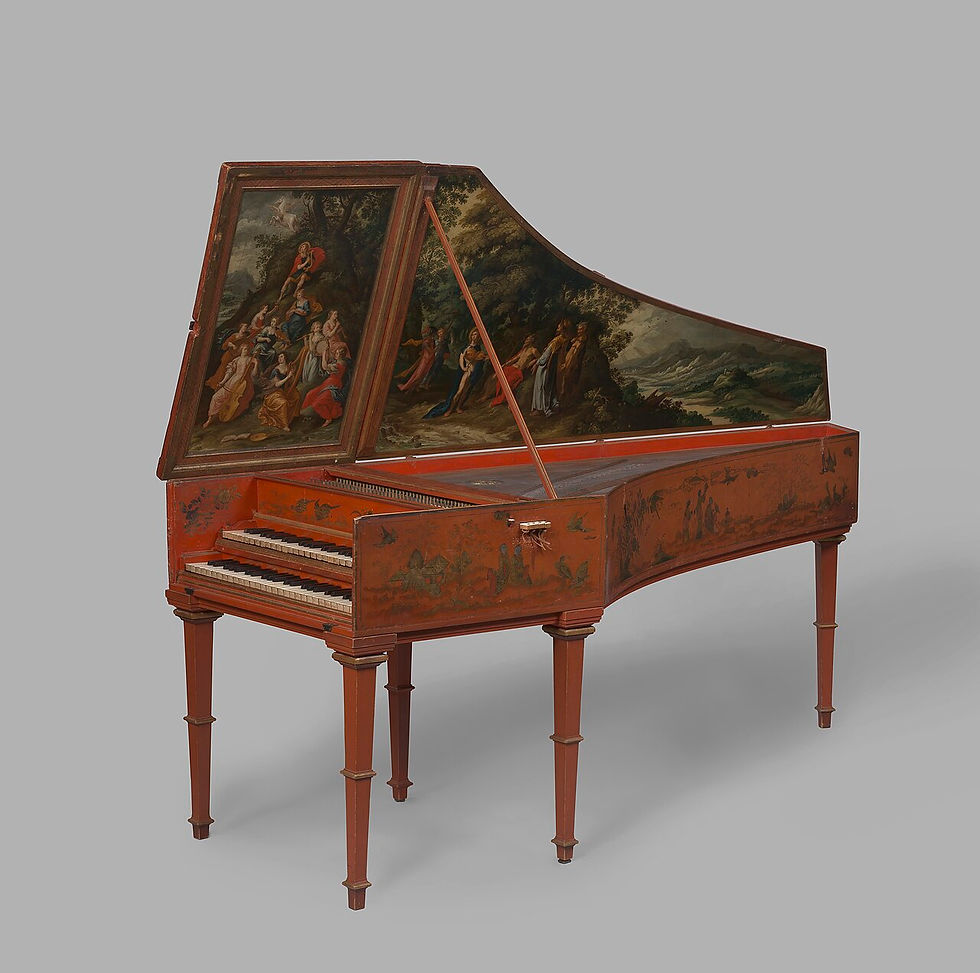
The piano's predecessor is the harpsichord. The harpsichord has a different mechanism and doesn't offer the expressive qualities that the piano does. In the harpsichord, the string is plucked. During the 18th century, many builders across Europe tried to improve its sound, but the plucking itself was the limit.
Why is it called the pianoforte?
Because it could play both soft (piano) and loud (forte). The piano was originally called pianoforte, and it was invented around 1709 by the Italian Bartolomeo Cristofori. Piano and forte are dynamic terms, which in music refer to volume. This tells us that the piano was born as "that keyboard which can play quiet (piano) and loud (forte)."
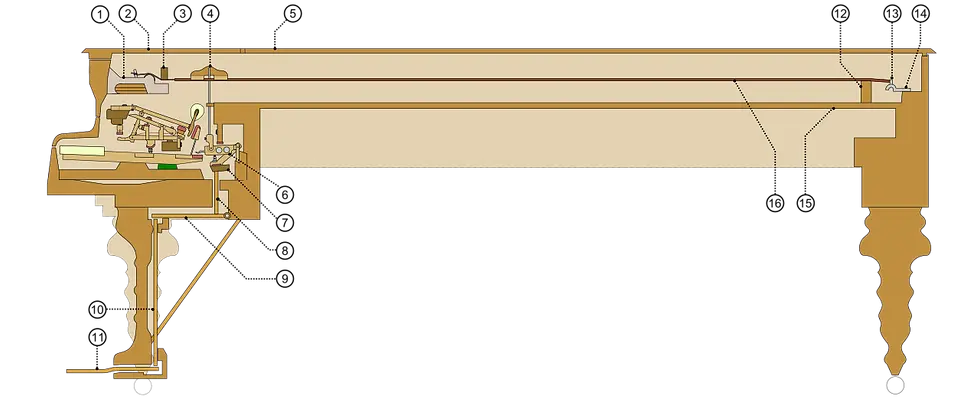
This was possible because of the mechanism invented by Cristofori, called the escapement. Thanks to it, the hammer strikes the string and comes back immediately, letting the string vibrate.
The new invention became famous after enthusiastic articles by critics like Scipione Maffei, and through the networking community of aristocr
ats, composers and music amateurs.
Did Bach play the piano?
Yes. Johann Sebastian Bach tried some of the first German pianos and gave feedback to their builder. As it often happens in music history, Bach was involved, commenting on and "consulting" for Gottfried Silbermann, who was building the first pianos in Germany. This marks the beginning of a school of piano makers like Johann Andreas Stein.
Who invented the grand piano?
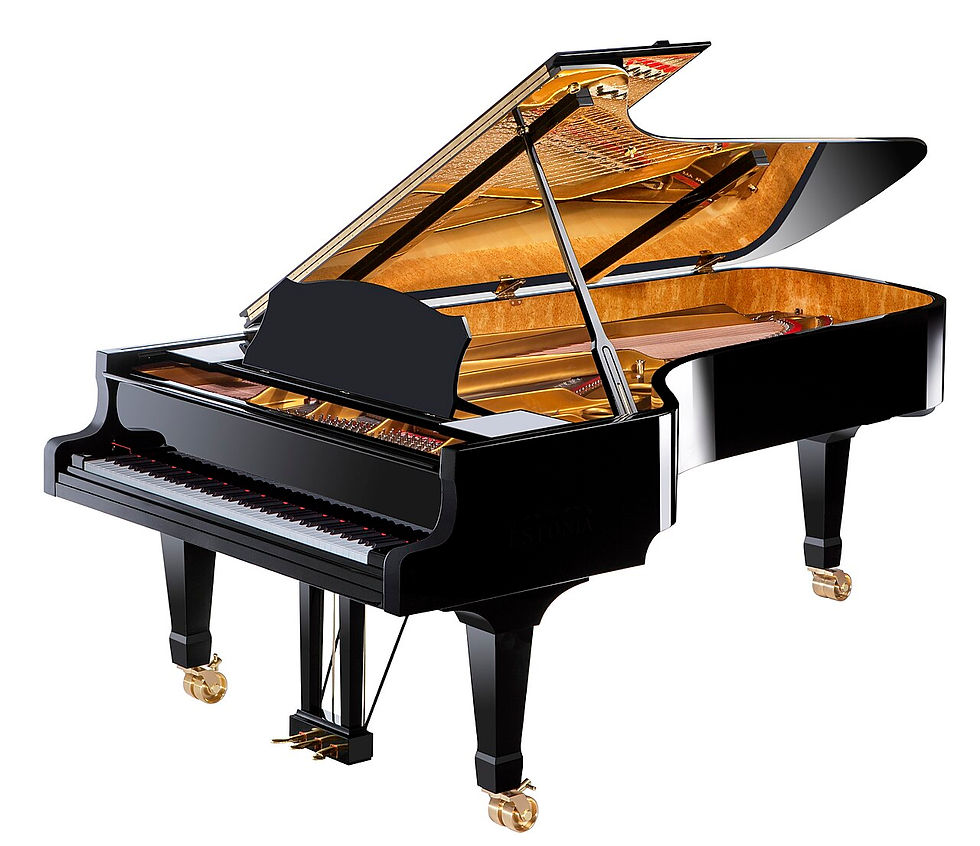
The name "Grand Piano" comes from Robert Stodart in London, in 1777. In London, Johann Zumpe made a small, rectangular piano that was affordable, and it became very popular with the middle class. Johann Christian Bach, son of J.S. Bach, made it a solo instrument in the concert halls of London in the 1760s.
Also in England, Americus Backers improved the mechanics, and together with Stodart and John Broadwood they arrived at the instrument they called the "Grand Piano."
Broadwood pianos helped define the pedals (Broadwood patented pedals in 1783), including the soft pedal, or una corda. These pianos were loved by Haydn, Beethoven, Liszt and Chopin.
Who invented felt hammers and the double escapement?
Two French builders: Jean-Henri Pape and Sébastien Érard. Pape added felt to the hammers, which gave a more even sound, and Érard introduced the double escapement (patented 1821), which allows for fast repetition of the same note.
How did Bösendorfer make his pianos famous?
By letting people hear them: concert halls and a piano competition. Ignaz Bösendorfer is a very important figure in the evolution of the piano. His pianos were admired for their warm, even sound, and the young Franz Liszt was fascinated by them. But he also understood that the best advertising agent is the sound of the piano itself. His marketing tactic was building two concert halls (200 seats in 1860, then 600 seats in 1872) and creating the first edition of the Bösendorfer Piano Competition in 1889, where the winner got a brand new piano as a prize.
When did Steinway start making pianos?
Steinway & Sons was founded in New York in 1853. Before that, in America, Jonas Chickering introduced the cast iron frame, which gave the piano more brightness and power. Then came Steinway, whose pianos brought together all the technical innovations of the time. Meanwhile in Europe, Bechstein and Blüthner became famous for the quality of their sound.
The names on the pianos
Famous piano "brands" of today carry the last names of important contributors to the evolution of the piano mechanism: Steinway, Bösendorfer, Bechstein, Blüthner, Érard, Broadwood. Next time you sit at a piano, take a look at the name. You're probably reading a little piece of history.
Frequently Asked Questions
Who invented the piano?Bartolomeo Cristofori, an Italian instrument maker, invented the piano around 1709 in Florence.
What is the difference between a piano and a harpsichord?In a harpsichord the strings are plucked, so the volume barely changes. In a piano the strings are struck by hammers, so the player can play soft or loud depending on touch.
What does "pianoforte" mean?In Italian, piano means soft and forte means loud. The name describes the instrument's big innovation: it can play both.
What is the escapement in a piano?It's the mechanism that lets the hammer strike the string and fall back immediately, so the string can keep vibrating. Cristofori invented it, and Érard's double escapement (1821) made fast repeated notes possible.
What is the oldest piano brand still making pianos?Of the brands in this story, Broadwood and Bösendorfer go back the furthest, both founded before 1830, and Steinway & Sons followed in 1853.
Want to play the instrument Cristofori invented? Book a piano lesson in Miami with Green Hat Music School
About the author: Mario del Risco is a musician and educator with more than 13 years of experience teaching music across multiple instruments. He is co-founder of Green Hat Music School in Miami, which offers private in-home and online music lessons, early childhood music and group classes.
Sources
Tudor, Brînduşa. (2019). The Piano, A Perfect Musical Instrument – Beginnings and Evolution (18th – 19th Centuries). Review of Artistic Education. 17. 100-105. 10.2478/rae-2019-0010.
Comments